

Picture this: you’re at Wrest Point on a chilly Hobart evening, the pokies have been freezing over, and you reckon your luck is about to turn. That gut feeling is one of the oldest instincts in gambling, yet mathematics tells a completely different story. The cold streak gambling myth explained properly starts with understanding that each spin, hand, or draw is mathematically independent of what came before it. Outcomes are generated, and no machine or dealer carries memory of recent results across trials. Gambler’s fallacy lives in our brains, not in the outcomes themselves.
Where the Myth Originates and Why It Persists

Humans are pattern-seeking creatures by evolutionary design. When we see five reds land consecutively on a roulette wheel, our cortex screams that black must be due. Australian players chasing a “due” win after a string of losses often extend sessions, increase stakes, or switch games mid-stream, decisions that magnify losses rather than recover them. Casinos near the waterfront and suburban venues alike rely on this psychology, but licensed Australian operators are bound by strict state regulations that govern randomness disclosure and payout reporting.
The persistence of the cold streak belief also comes from selective memory. We vividly recall the time a long losing run did flip into a win, while quietly forgetting the dozens of times it didn’t. That recall bias, combined with the genuine randomness of outcomes, feeds a narrative that simply isn’t statistically sound. Independent trials don’t care about your previous six losses. Your chip stack, however, certainly does.
A Closer Look at the Mechanics Behind the Belief
Independent Trials and the Math of Randomness
A fair coin flipped ten times in a row showing tails does not increase the probability of heads on the eleventh flip. The chance stays at exactly 50/50, because each flip carries no memory. The same logic applies to a pokies spin, a blackjack hand, or a lottery draw when each event is independently generated. Understanding this single principle dismantles most cold streak theory at its foundation.
Hot Hand Fallacy as the Twin Myth
The cold streak notion has a sibling: the hot hand fallacy, the belief that a winning streak means more wins are coming. Both share the same mathematical flaw. Both tempt players to over-bet during volatile stretches. Recognising them together is how disciplined players protect their bankroll across hundreds of sessions.
Variance, Sample Size, and Real Outcomes
Cold streaks are mathematically expected within large sample sizes. A game with a 48% win rate, say a simple even-money bet, will still produce sequences of six, eight, or ten consecutive losses purely through variance. That isn’t a curse; it’s standard deviation doing its job. Short-term chaos and long-term averages can coexist without contradiction, and the gap between them is where players either build discipline or burn through holiday funds by Tuesday.
| Myth Component | Player Perception | Statistical Reality |
|---|---|---|
| Losses predict a win | “I’m due” | Independent events, same odds each round |
| Machines get “cold” | Payouts slow down | Random number generator unaffected by history |
| Streaks influence each other | Pattern-based betting | Each trial isolated, no carryover |
| A win “recovers” losses | Chasing break-even | Variance continues regardless of stake size |
Who This Knowledge Serves Best
Players who treat gambling as paid entertainment rather than income benefit most from internalising the cold streak gambling myth explained. If you log onto woohoo999.com/aus expecting predictable patterns, you’ll misread the experience entirely. Recreational players with a fixed session budget, a clear stop-loss, and the emotional discipline to walk away after four consecutive losses are the ones who keep gambling enjoyable long-term. Chasing cold streaks to recover prior losses is the fastest route from a fun night out to a regrettable Monday morning bank statement.
A Flat White Chat Between Mates
“Yeah, nah, I reckon the pokie’s been due for a big one since about nine,” Jarrod said, stirring his flat white at the café near Salamanca Place. “Lost four hundred already, so the fifth spin’s gotta hit.”
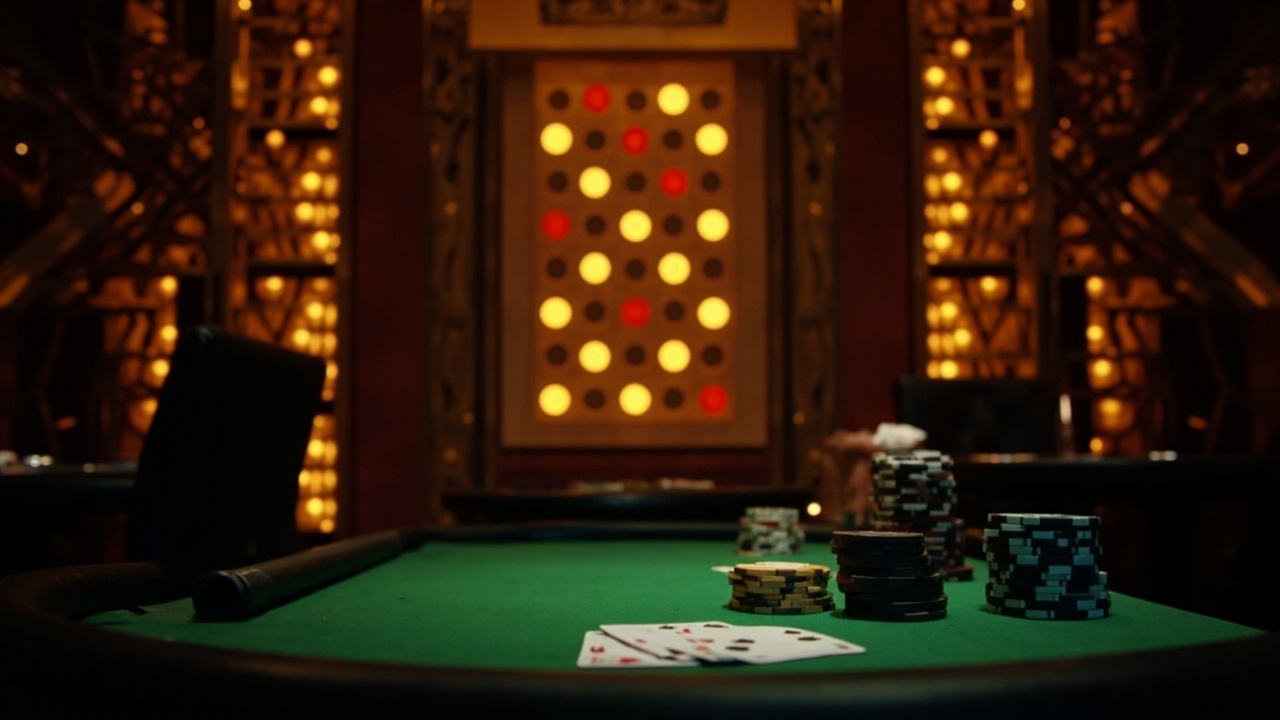
Mitch leaned back and laughed. “Mate, that’s the oldest trap in the book. Every spin’s its own thing. You keep thinking like that and you’ll be walking to the TAB instead of the ferry home. Set a limit, hit it, go watch the tides instead.”
“Sure, but it’s still worth knowing how to read the wheel.” He pulled up a quick primer and grinned. “Besides, knowledge is the only edge that doesn’t get you barred.”
Jarrod chewed his lip. “Yeah, fair. Same as that roulette strategy tools breakdown I read, basically saying your bankroll discipline matters way more than any pattern.”
“Exactly. The machine doesn’t owe you anything. Walk away a winner when the universe gives you one, not when you decide you’ve ‘earned’ it.”
Sticking to Discipline Over Superstition
Cold streaks are real experiences with brutal financial impact, but they’re not signals, patterns, or promises. They’re variance behaving exactly as probability predicts. The Australian gambling environment, from licensed Tasmanian venues to mainland operators, expects every adult player to approach each session as a fresh start, with a pre-set bankroll, a time cap, and zero expectation that past losses shape future wins. Hold onto those boundaries and the cold streak myth loses its grip on your wallet, your mood, and your weekend.